
Table of Contents
- What Sports Massage Therapy Is and Who It Helps
- The Main Sports Massage Benefits for Recovery and Mobility
- Sports Massage vs Deep Tissue Massage: What’s the Difference?
- Sports Massage Before or After Workout: Timing Your Session
- How Often to Get a Sports Massage
- What to Expect at Your First Appointment
- Safety, Contraindications, and When to See a Doctor
- Choosing a Qualified Sports Massage Therapist
- Frequently Asked Questions
Last Updated: October 12, 2026
What Sports Massage Therapy Is and Who It Helps
Sports massage therapy is targeted bodywork for the soft tissues most affected by physical activity: muscles, tendons, fascia, and connective tissue around joints. At Crystal Body Revision, we treat it as a working tool, not a luxury, the goal is restoring how tissue moves.
The term gets used loosely, but a session aimed at a specific restriction looks and feels very different from a general relaxation massage. Results follow the technique, not the label.
How It Differs From a Relaxation Massage
A relaxation massage calms the nervous system: light to moderate pressure, broad rhythmic strokes, and even full-body work. You leave loose and settled.
Sports massage keeps a specific problem in view. Pressure adjusts to reach deeper layers, time concentrates on trouble spots, and the session often includes table stretching, joint mobilization, and trigger point therapy. You leave with a measurable change in how a muscle or joint moves.
Who Benefits: Athletes, Desk Workers, and Chronic Pain Patients
Runners, lifters, and weekend cyclists use it for hamstring tightness and shoulder soreness. Desk workers arrive with the same complaints from the opposite cause: hours of stillness that lock the neck and upper back.
The common thread is not fitness level. It is tissue that has stopped moving well.
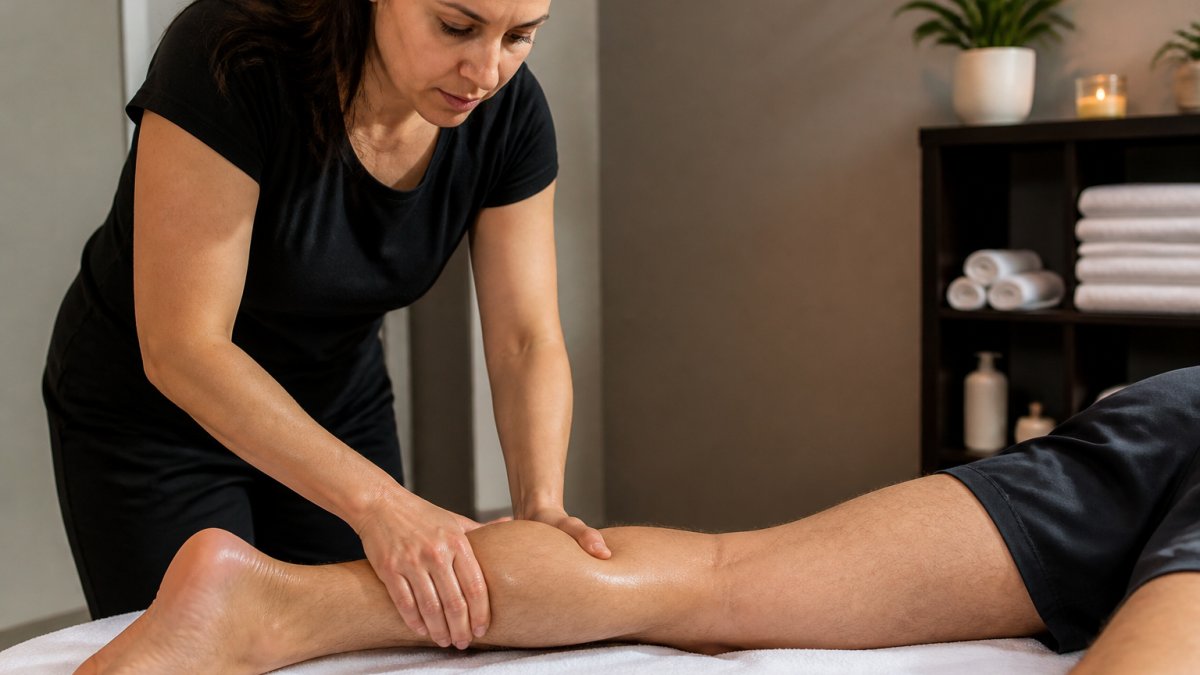
The Main Sports Massage Benefits for Recovery and Mobility
The clearest sports massage benefits show up in two areas: how quickly you recover and how freely you move. Neither happens overnight, and neither is a cure.
Recovery is the first: intense training creates micro-damage and localized discomfort, and massage increases circulation and reduces tension, which many people find shortens the window before they feel normal again. The second is range of motion, when a muscle stays tight for weeks, the joint it crosses loses mobility, and releasing that tension restores some of what was lost.
Here is what a well-run session typically targets:
- Muscle tightness in the hamstrings, calves, and hip flexors
- Shoulder soreness and restricted overhead reach
- Neck and upper-back tension from desk posture
Sports massage improves recovery time and mobility by addressing the specific tissue that is restricted. It supports your training or your workday; it does not replace strength work, conditioning, or medical care.
Sports Massage vs Deep Tissue Massage: What’s the Difference?
The two overlap heavily, which is why the comparison confuses people. Deep tissue describes a pressure level and a layer of tissue.
In practice, a sports massage session often uses deep tissue pressure but is organized around a goal: pre-event work is brisk and stimulating, post-event work slower and more thorough.
| Feature | Sports Massage | Deep Tissue Massage |
|---|---|---|
| Primary goal | Performance, recovery, injury prevention | Chronic tension and adhesions |
| Pressure | Varied, adjusted to the goal | Consistently firm to deep |
| Session focus | Specific muscles and movement patterns | Broad areas of tension |
| Timing | Often tied to training or events | Scheduled as needed |
| Typical add-ons | Table stretching, joint mobilization | Trigger point therapy, myofascial release |
If you are training for something, you want the first column. If you simply carry a decade of tension in your shoulders, the second may serve you better.
How Sports Massage Compares to Other Options
Deep tissue is not the only alternative you will weigh.
Swedish massage. The classic relaxation modality: light to moderate pressure, long flowing strokes, oil or lotion, and a full-body sequence.
Self-massage and foam rolling. A foam roller, lacrosse ball, or massage gun is inexpensive, available daily, and useful between professional sessions.
Chiropractic and acupuncture. These address different systems and are sometimes used alongside massage.
The right choice depends on your goal, not on which modality sounds most intense. Relaxation, rehabilitation, and performance each point to a different provider. When in doubt, ask what the treatment is designed to change.
A Simple Way to Decide
- You want to unwind and feel less stressed: Swedish or a general relaxation massage.
- You have a diagnosed injury or a plan of care: physical therapy first, massage as support.
- You are training, competing, or managing recurring tightness: sports massage.
Sports Massage Before or After Workout: Timing Your Session
Get a sports massage after a workout or competition in most cases. Post-event massage is the more common and useful application because it targets tissue that is already fatigued and congested.
Pre-event massage has a narrower window: light, fast, and stimulating, delivered shortly before activity to prime circulation without leaving the muscle heavy. A deep, thorough session right before you compete can leave you flat.
A practical way to think about timing:
- Pre-event: 15 to 30 minutes, light pressure, same day as activity
- Post-event: 30 to 60 minutes, moderate to firm pressure, within a day or two
- Avoid: deep work on a muscle you plan to load heavily within a few hours (Source: American Massage Therapy Association (AMTA) on the benefits of massage)
Booking a deep, aggressive session the day before a race or a heavy training day is a common mistake. Tissue can feel sore and sluggish for a day afterward, which is the opposite of what you want going into an event.
How Often to Get a Sports Massage
How often to get a sports massage depends on your training load, your symptoms, and how your body responds.
A reasonable starting pattern for most active people is every two to four weeks, adjusted around training cycles.
For chronic pain rather than athletic recovery, frequency is set by how long the relief holds. If you feel better for three days and then revert, the interval is telling you something.
A few signals that it is time to book:
- A muscle has stayed tight for more than two weeks
- Range of motion has dropped noticeably
- You are sleeping worse because of tension or discomfort
Session Length and What It Costs
Most sports massage sessions run 30, 60, or 90 minutes. A focused 30-minute session often covers one problem area, such as a single hamstring or a shoulder. A 60-minute session allows assessment plus treatment of a region and its neighbors.
Pricing varies widely by market, therapist experience, and setting. Spa settings, sports clinics, and independent therapists each price differently, so confirm the current rate when you book.
A few cost-related points worth knowing:
- Insurance. Standard health insurance generally does not cover sports massage for performance or recovery. Some plans cover massage when it is part of a documented treatment plan for a diagnosed condition, and auto insurance may cover massage after a motor vehicle accident. Check your plan and ask the provider whether they bill insurance.
- Packages and memberships. Many practices offer multi-session packages or monthly memberships at a lower per-session rate. These make sense if you have committed to a regular schedule, but only if you will actually use them.
- Cancellation policies. Ask about the window for canceling without a fee. A 24-hour policy is common.
Timing Around Training and Events
When you schedule matters as much as how often. A common pattern among athletes is a maintenance session on a rest day, a lighter pre-event session in the days before competition, and a post-event session within a day or two of the event. Deep, aggressive work is best placed well away from a hard training session or race, since tissue can feel sore and sluggish for a day afterward.
If you are new to sports massage, start with one session, note how you feel over the following week, and let that response set your interval. A schedule built from your own recovery pattern beats a generic recommendation every time.
What to Expect at Your First Appointment
Your first appointment starts with a conversation, not a massage. A qualified therapist asks about your activity level, history, where you feel restricted, and what you want out of the session.
From there, a typical first session follows a recognizable shape:
- Intake and history. Medical background, injuries, medications, and goals.
- Assessment. Movement checks, palpation, and identifying the actual restriction rather than the spot that hurts.
- Treatment. Hands-on work on the target areas, with pressure adjusted to your comfort and feedback.
- Techniques as needed. Table stretching, joint mobilization, trigger point therapy, or vibration and shaking to settle tissue.
- Reassessment. Rechecking the movement that was limited at the start.
- Aftercare. What to do in the next 24 to 48 hours, and when to come back.
You may feel some soreness the next day, similar to what follows a hard workout. That is normal and usually fades within a day or two. Drink water, keep moving gently, and avoid stacking a heavy training session on top of it.
Safety, Contraindications, and When to See a Doctor
Massage is generally well tolerated, but it is not appropriate for everyone on every day. Honest practitioners screen for this, and you should raise it yourself if a therapist does not ask.
Conditions requiring medical clearance or a modified approach include active infections, fever, recent fractures, blood clots, uncontrolled high blood pressure, and certain skin conditions over the treatment area.
There is also a line between muscular discomfort and something that needs a physician. Seek medical care rather than a massage if you have:
- Sudden, severe, or sharp pain
- Numbness, tingling, or weakness in a limb
- Loss of bladder or bowel control alongside back pain
Numbness, tingling, or weakness is a nerve symptom, not a muscle knot. Massage is not the right first step for it. Get it evaluated by a physician before booking a session.
Choosing a Qualified Sports Massage Therapist
Look for a licensed massage therapist with specific training in sports and therapeutic work, and ask what that training involved.
Questions worth asking before you book:
- What training do you have beyond your license?
- How do you assess a restriction before treating it?
- Do you adjust pressure based on feedback during the session?
A therapist who answers these directly and admits the limits of what massage can do is usually the one you want.
At Crystal Body Revision, our licensed massage therapists work from an assessment rather than a script, and every session is tailored to the individual.
Frequently Asked Questions
What is sports massage therapy?
Sports massage therapy is a hands-on treatment that uses soft-tissue techniques like trigger point therapy, compression, and joint mobilization to address muscle tightness, soreness, and restricted movement. It is designed for active individuals, athletes, and anyone with physically demanding work or chronic tension. Sessions are tailored to your specific trouble spots and goals, whether that is recovery, performance, or pain relief.
Is sports massage good for you?
Yes, for most people. Research suggests it can reduce muscle soreness, improve flexibility, and support recovery after exercise. It also helps with pain relief and injury management when performed by a qualified therapist. However, it is not a replacement for medical care. If you have an acute injury, a skin infection, or a circulatory condition, check with your doctor first.
What is the difference between sports massage and deep tissue massage?
Sports massage focuses on functional goals like performance, recovery, and injury prevention, often using movement and stretching. Deep tissue massage targets chronic tension and adhesions in specific muscle layers. The two overlap, but sports massage is typically more active and tailored to athletes or active lifestyles, while deep tissue is broader and more pressure-focused.
Should you get a sports massage before or after exercise?
It depends on your goal. A pre-event massage is lighter and aims to prepare muscles for activity, usually within an hour before. A post-event massage is more focused on recovery and can be done within a few hours to a day after. For general training, many people schedule sessions on rest days to avoid interfering with workouts.
How often should you get a sports massage?
Frequency depends on your activity level, goals, and budget. Athletes in heavy training might get a session every one to two weeks. For general muscle tightness or chronic pain, once a month is a common starting point. Your therapist can recommend a schedule after assessing your individual needs and response to treatment.
Can sports massage help with muscle soreness or back pain?
Yes, it can ease muscle soreness and back pain by reducing tension, improving blood flow, and releasing trigger points. Many people with desk jobs or physically demanding work find relief in targeted treatment for the shoulders, neck, and lower back. It works best as part of a broader plan that includes movement and ergonomic adjustments.
What should you expect during a sports massage?
Your first session includes a consultation about your health history, trouble spots, and goals. The therapist will use a mix of techniques such as trigger point therapy, table stretching, and joint mobilization. Pressure is adjusted to your comfort. You may feel some soreness afterward, similar to after a workout, which usually fades within a day.
How do you choose a qualified sports massage therapist?
Look for a licensed massage therapist (LMT) with training in sports massage or orthopedic techniques. Ask about their experience with your specific condition, whether they create personalized care plans, and if they collaborate with other providers.
Chronic muscle tightness and restricted movement rarely resolve on their own, and guessing at the right treatment wastes both time and money. Crystal Body Revision offers assessment-led sports massage, deep tissue work, myofascial release, and customized bodywork built around your specific restrictions and goals, delivered by licensed therapists serving Ralston and West Omaha. Schedule today with Crystal Body Revision and start moving more comfortably.
